
Top 8 Fall Cocktail Ingredients for Long Island Liquor Store
October 10, 2026
If you are mixing fall drinks because the first cold night hit and your usual vodka soda feels flat, you are in the right place. We hear this from Commack shoppers every season. You want something warmer, easier to build, and better suited to apple cider, bourbon, and a long evening with friends. The good news is that a few smart ingredients can do most of the work for you.
At Long Island Liquor Store, the conversation usually starts with comfort. People want drinks that taste like the season without becoming cloying. They also want bottles and mixers that actually help, not clutter the counter. That is where the right fall cocktail ingredients matter most.
-
Cinnamon sticks that turn any shaker into fall
Cinnamon does more than sweeten a drink. It brings structure, aroma, and a clean warmth that settles into apple cider cocktails, bourbon drinks, and even rum punches. When you use it well, the whole glass smells like autumn before the first sip lands. That matters because smell shapes the way people read flavor. In a busy Commack liquor store, cinnamon is one of the simplest ways to make a home bar feel intentional.
Why cinnamon does more than add sweetness to apple cider cocktails and bourbon drinks
Cinnamon works because it bridges sugar and spice without shouting. In apple cider cocktails, it rounds out tart fruit. In bourbon drinks, it softens oak and brings the vanilla notes forward. It also plays nicely with amaro, vermouth, and cranberry, which makes it useful in more than one recipe. If you like seasonal mixology, this is one of the strongest fall cocktail ingredients you can keep on hand.
Here is the part most home bartenders miss: cinnamon is not just a garnish. It changes the nose, and the nose changes the drink. A single stick resting in warm cider can do more than a spoonful of powdered spice ever will. That is why cinnamon stick ideas for fall cocktails and bourbon drinks belong in your home bar essentials list.
How to use whole sticks in a simmer, a garnish, or a quick-infused syrup
Whole sticks shine in three ways. First, you can simmer them gently with cider and citrus peel. Second, you can use them as an autumn garnish ideas piece in a stirred cocktail. Third, you can make a quick syrup by warming water, sugar, and cinnamon together, then cooling it before use. Each method gives you a different level of control, which helps when party planning gets busy.
One client in Suffolk County wanted a cider bourbon batch for a small gathering near Huntington. The first version used ground cinnamon, and it tasted muddy. The second batch used whole sticks and a brief simmer, and the drink opened up immediately. That small swap saved the whole pitcher. For anyone building home bar essentials and mixology supplies for seasonal cocktails, this is a smart place to start.
The common mistake that makes cinnamon taste dusty instead of warm and clean
The mistake is heat and time. Too much of either turns cinnamon bitter and dusty. Ground cinnamon is especially easy to overdo, because it hangs in the liquid and clouds the finish. Whole sticks are cleaner, and brief contact is usually enough. If the drink starts tasting like potpourri, you have gone too far.
Use restraint and let the other ingredients breathe. Cinnamon should support bourbon for cocktails, not bury it. It should lift apple cider cocktails, not turn them into dessert. If you want that cozy effect without heaviness, pair a stick with orange peel, apple cider, or a little maple. That balance is what makes a fall drink feel polished instead of sweet.
-
Apple cider that carries the whole drink
Apple cider is the backbone of many autumn cocktail recipes. It brings fruit, acid, and body all at once. That means you can build around it without reaching for too many ingredients. For shoppers comparing mixers and fine spirits for fall drinks on Long Island, cider is often the quiet hero.
What kind of cider works best for autumn cocktail recipes and why cloudy often beats overly sweet
Cloudy cider usually has more character. It tastes like apples, not candy. That matters because fall cocktails need depth, especially when they include bourbon, rye whiskey, or amaro. Overly sweet cider flattens the drink. Cloudier cider keeps the structure alive and gives you more room to work.
Fresh cider from the North Fork often has a brighter, truer apple note. It feels more natural in seasonal mixology. If you are shopping at a Long Island spirit shop for autumn cocktail supplies in Commack, ask for a cider that tastes crisp and balanced. You want apple flavor, not syrup.
How cider plays with rye whiskey, vodka, and rum without getting lost
Cider loves rye whiskey because rye has spice and lift. It also works with vodka when you want the fruit to lead. Rum brings a softer, rounder finish, which can be excellent for a cooler night at home. The trick is to keep the ratios clean. Too much spirit and the cider disappears. Too little, and the drink tastes thin.
A good rule is simple: let the cider be the center, then choose the spirit based on the tone you want. Rye adds edge. Vodka keeps things crisp. Rum makes the drink feel warmer. If you are building around bourbon for cocktails and small-batch whiskey picks, cider can keep the whole mix grounded.
When to keep the cider still and when to reach for sparkling wine or prosecco instead
Still cider works best when you want richness. Sparkling cider, prosecco, or champagne changes the drink into something lighter and more festive. If the cocktail includes amaro or maple, still cider usually gives better balance. If the drink leans toward brunch or a holiday toast, bubbles can help it feel brighter.
That distinction matters for entertaining. A still cider punch suits a dinner table near Smithtown. A sparkling version fits a friend group gathering before a game or concert. If you want to compare sparkling options, the difference between champagne and prosecco for fall events can help you choose. The right cider choice depends on the mood you want the room to carry.
-
Vermouth that gives fall cocktails their backbone
Vermouth is the ingredient that makes many fall drinks taste finished. It adds herbs, subtle sweetness, and a little edge. That is why seasoned bartenders treat it as more than a cocktail helper. In the right hands, vermouth gives shape to whiskey, gin, vodka, and even tequila drinks. For anyone stocking an online liquor store cart, it belongs near the top.
Why sweet vermouth matters in seasonal mixology beyond classic Manhattan territory
Sweet vermouth earns its keep because it deepens flavor fast. It brings dried fruit, spice, and botanical notes that work beautifully with bourbon, rye, and amaro. In autumn cocktail recipes, it can turn a simple two-ingredient drink into something layered. It also works well with cognac for fall drinks, especially when you want a softer, more elegant profile. That makes it a strong choice for home bar essentials.
Sweet vermouth is also flexible. You can use it in stirred drinks, spritzes, or low-ABV builds. That range matters during party planning, when not everyone wants a heavy pour. If you are shopping for vermouth for seasonal mixology and classic fall drinks, think of it as the bridge between spirit and mixer.
How dry vermouth can sharpen gin, vodka, and even tequila drinks
Dry vermouth brings tension and lift. With gin, it sharpens the botanicals. With vodka, it adds just enough character to keep the drink from feeling blank. Even tequila benefits, especially when the goal is a crisp, herb-leaning cocktail with citrus. That surprise is one reason dry vermouth deserves a spot beside bitters and amaro.
The best uses stay simple. Keep the vermouth cold. Measure it carefully. Let it do quiet work in the background. On Long Island, where tastes range from classic martinis in Huntington to more adventurous builds near Route 25A, dry vermouth gives you useful range. It is one of the easiest ways to make mixers and fine spirits for fall drinks on Long Island feel more polished.
Storage habits that keep vermouth fresh enough for home bar essentials
Vermouth is wine-based, so it needs care. Refrigerate it after opening. Use it within a sensible window, because freshness matters more than people think. If it tastes flat or dull, your cocktail will too. This is one of the most common mistakes we see in home bars.
Store it upright and keep the cap tight. Avoid warm shelves near the stove or window. If you only use vermouth occasionally, buy smaller bottles. That keeps the bottle lively and helps your drinks stay bright. For shoppers asking how to build a home bar in Commack NY for fall entertaining, vermouth deserves a protected spot.
-
Orange bitters that make the whole glass wake up
Orange bitters are small, but they change everything. They sharpen sweet notes, brighten dark spirits, and connect flavors that might otherwise feel separate. In fall cocktail ingredients lists, they act like a final polish. That tiny dose of citrus can make bourbon, amaro, and cranberry mixers feel deliberate instead of random. If you want a drink to taste finished, this is one of the best tools available.
Why a few dashes can bridge bourbon, amaro, and cranberry mixers
Orange bitters create a line through the glass. They connect the sweetness in bourbon, the herbal bitterness in amaro, and the tartness of cranberry. That bridge is useful in holiday spirits, where flavors can get crowded fast. A few dashes give the drink a clean center. They also keep the finish from feeling heavy.
One holiday punch we tested for a small family gathering in Suffolk County tasted fine until the last sip. Then it felt muddy. A couple of dashes of orange bitters fixed the whole bowl. That is the kind of detail that separates an acceptable drink from one people remember. For cranberry builds, orange bitters for whiskey, gin, and cognac cocktails are a smart pickup.
How orange bitters change the finish of whiskey, gin, and cognac cocktails
With whiskey, orange bitters add lift and keep the oak from dominating. With gin, they bring out citrus and botanicals. With cognac, they add a dry edge that makes dessert-style cocktails feel more balanced. The effect is subtle, but subtle is the point. You do not need a loud ingredient here.
If you like rare whiskey or single malt scotch, orange bitters can also improve the finish without hiding the spirit. That is helpful when the bottle itself is the attraction. It is also a good way to stretch a quality pour during party planning. A smart dash can make a drink feel more complete than a bigger dose of sugar.
The difference between bold aromatic bitters and citrus-led bottles in a fall lineup
Aromatic bitters lean toward spice, bark, and depth. Citrus-led bitters lean toward brightness and lift. In fall cocktails, both have value, but they do different jobs. Aromatic bitters help with structure. Orange bitters help with clarity. If your drink already has cinnamon, maple, or amaro, orange bitters often work better.
Think of them as finishing tools, not main flavors. If the cocktail needs warmth, reach for aromatic. If it needs light, use citrus. Many Long Island spirits shoppers keep both in the cart because the use cases overlap. For curated fall cocktail ingredients for a Long Island liquor store, orange bitters are one of the easiest quality upgrades you can make.
-
Maple syrup that makes bourbon taste like October
Maple syrup can make a cocktail feel like peak fall, but only if you keep it in check. Used well, it adds depth and roundness. Used badly, it turns the drink into dessert. That is why it belongs on a serious seasonal mixology list. It should support the spirit, not cover it up. ### Why maple works best as a support note not a candy coating 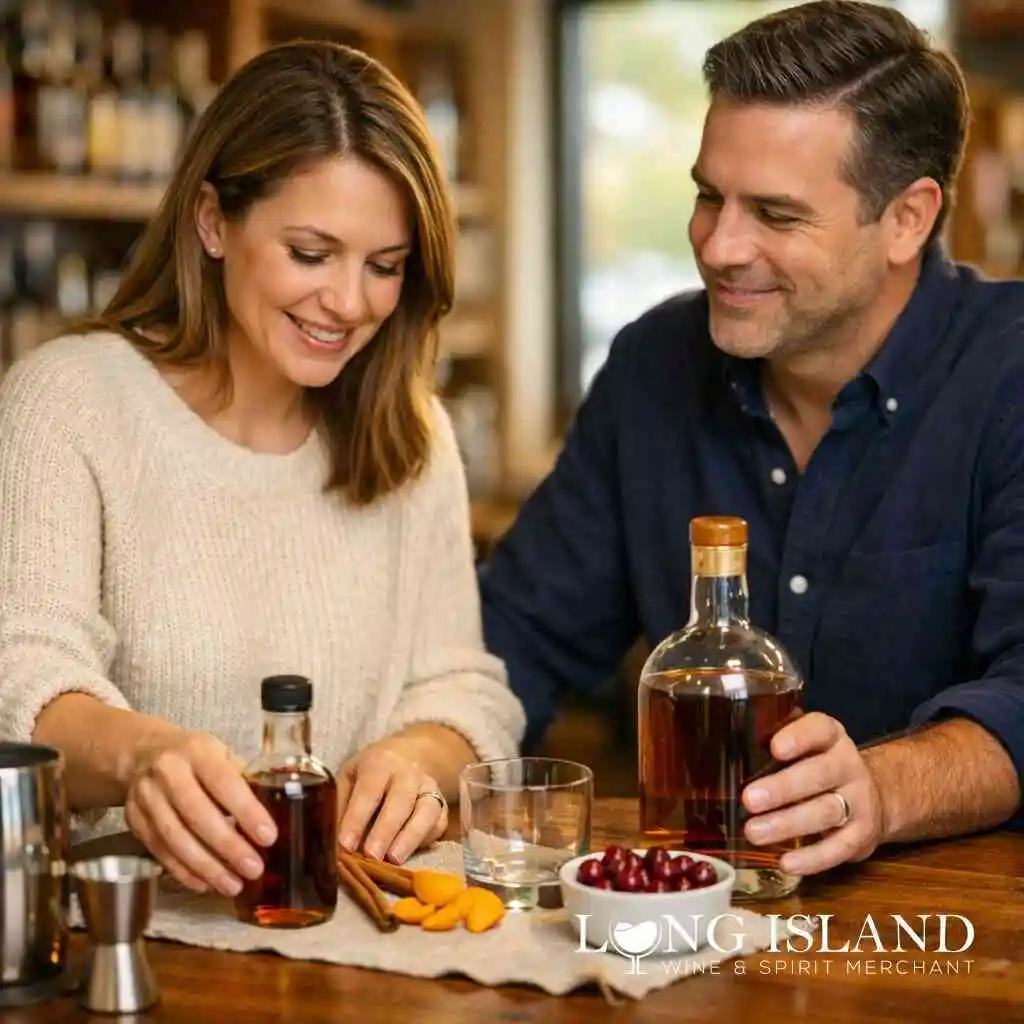
Maple brings woodsy sweetness, but the best drinks use only a little. A teaspoon can be enough. It softens edges in bourbon cocktails and adds warmth to rye whiskey. It can also pair well with single malt scotch when the goal is a smoky, slightly sweet nightcap. The key is restraint.
If you make maple the main event, the spirit disappears. If you use it as a frame, the drink becomes richer. That is especially true in autumn cocktail recipes built around apple cider, orange bitters, or vermouth. A small amount goes a long way. That is why top fall party spirits for Commack Fine Wine and Spirits often pair well with a modest maple pour.
How to pair maple with rye whiskey, small-batch bourbon, and single malt scotch drinks
Rye whiskey likes maple because rye already carries spice. Small-batch bourbon likes it because maple echoes the vanilla and caramel notes without overwhelming them. Single malt scotch is trickier, but a delicate maple touch can work with lighter styles. If the scotch is smoky, keep the maple very light. If it leans sweet or fruity, it can handle more.
This is also where understanding the whiskey vs bourbon difference helps. Bourbon tends to welcome maple more readily because of its sweeter corn base and barrel profile. Rye usually needs a firmer hand. Either way, maple fits best with a spirit that already has structure. The drink should still taste grown-up.
Where maple falls apart in the glass and how to keep the balance crisp
Maple fails when it becomes sticky. Too much creates a thick finish and masks citrus, spice, and botanicals. It also clings to the palate, which makes the drink tiring halfway through. The fix is acidity. Add lemon, orange, or cranberry to keep the profile lively. You can also use a drier spirit or a splash of vermouth.
If the drink still feels heavy, cut the maple by half. That small adjustment often solves the problem. Many home bartenders overcorrect with sweetness because they are chasing comfort. You can get comfort without losing shape. That is the difference between a cozy cocktail and a flat one.
-
Cranberry mixers that give Long Island gatherings a sharper edge
Cranberry is one of the most useful seasonal mixers because it works from early fall straight through holiday entertaining. It adds tartness, color, and energy. It also plays nicely with vodka, gin, tequila, and even rum. For Long Island gatherings, that versatility matters. You can keep one ingredient and change the spirit to fit the crowd.
Why cranberry belongs in both holiday spirits and early fall entertaining
Cranberry fits the season because it tastes bright without feeling summer-like. It gives holiday spirits a sharper edge and keeps heavier drinks from going dull. That is useful when the table has rich food, baked dishes, or a long evening of conversation. It also brings color to the glass, which people notice right away. Good drinks should look alive.
A cranberry build also travels well across settings. It works for a low-key dinner in Commack and for a larger spread out near the Hamptons. That range makes it useful for how Commack NY alcohol delivery supports fall entertaining, especially when you are stocking for a group. Keep cranberry on hand and the rest becomes easier.
How to build a cleaner cranberry cocktail with vodka, gin, or tequila
Start with cranberry that is tart, not syrupy. Then choose a spirit. Vodka keeps the drink clean. Gin adds botanicals. Tequila brings a dry, slightly earthy lift that works better than many people expect. Each path gives you a different personality without much extra work.
Use fresh citrus to sharpen the edges. Lemon and lime both help. If you want more depth, add orange bitters or a small touch of ginger liqueur. That kind of layering can turn a simple mixer into a polished drink. For shoppers who like vodka and gin for clean cranberry fall cocktails, cranberry is one of the easiest wins on the shelf.
When to use fresh citrus and when to lean on ginger liqueur for lift
Use citrus when the drink needs brightness. Use ginger liqueur when it needs warmth and spice. Citrus gives immediate lift. Ginger adds finish and body. The two can work together, but they should not compete. If cranberry already feels tart enough, ginger may be the better move.
This is especially useful in larger batches. Citrus can fade if the drink sits too long. Ginger liqueur keeps more presence over time. That matters during party planning, when the bowl may stay on the table for hours. A little planning here prevents a limp final pour.
-
Ginger liqueur that warms the glass without overpowering it
Ginger is one of the most underestimated ingredients in cool-weather cocktails. It warms the palate, wakes up the finish, and adds energy without making the drink feel heavy. In a season built on bourbon, cider, and spice, ginger gives you motion. That is why it belongs in a smart home bar.
Why ginger belongs in cool-weather cocktails with rum, brandy, and mezcal
Ginger works with rum because both bring warmth. It works with brandy because the fruit and spice echo each other. It works with mezcal because ginger can soften smoke without erasing it. That makes it useful for guests who want something a little different from the standard bourbon pour. It also keeps the drink from feeling one-note.
For fall entertaining, that matters. You may be balancing a group with different preferences, and ginger gives you room to adapt. It can make a drink feel brighter or richer depending on what you pair it with. If you are exploring craft rum and tequila for cool-weather mixed drinks, ginger deserves a look.
How ginger liqueur compares with fresh ginger, ginger beer, and ginger syrup
Fresh ginger gives sharpness and bite. Ginger beer brings fizz and more sweetness. Ginger syrup offers control, but it can get sugary fast. Ginger liqueur sits in the middle. It brings spice, texture, and alcohol in one pour. That makes it especially useful when you want complexity without extra steps.
The right choice depends on the drink. A fizzy highball may want ginger beer. A stirred bourbon cocktail may want ginger liqueur. A batch punch might benefit from syrup if you need precise sweetness. There is no single answer, but ginger liqueur often gives the best balance for home use. It is efficient and expressive at the same time.
The best way to use ginger in party planning drinks that need depth and speed
Keep it simple. Use one measured pour, then build around it with citrus or cider. Ginger can be powerful, so do not free-pour it early in the process. Taste as you go. That is the cleanest way to avoid a drink that feels hot in the wrong way.
This is where speed matters during party planning. A bottle of ginger liqueur can solve several different cocktail problems at once. It gives depth to a short drink and lift to a batch. It also helps when guests want something festive without champagne. A smart bar saves time by making one ingredient work twice.
-
Amaro that ties the season together at the finish
Amaro is the finishing touch that turns a good fall drink into a memorable one. It brings herbs, citrus peel, roots, and gentle bitterness. That complexity fits the season perfectly. It also helps connect other ingredients that might otherwise drift apart. For many Long Island Liquor Store shoppers, amaro is the bottle that makes the home bar feel complete.
Why amaro belongs in sophisticated fall cocktail ingredients lists for Long Island Liquor Store shoppers
Amaro earns its place because it adds depth fast. It can brighten bourbon, deepen vermouth, and make cognac feel more layered. It also works in small amounts, which makes it useful for both beginners and experienced home bartenders. If you want sophisticated flavor without a complicated recipe, amaro is one of the smartest buys you can make.
It is also a strong fit for amaro for sophisticated fall cocktail finishes when you want the last sip to linger. The bitterness keeps sweeter ingredients in check. The herbal notes keep the drink interesting. That balance matters in cooler weather, when people tend to reach for richer flavors.
How amaro can bridge cognac, bourbon for cocktails, and herbal vermouth builds
Amaro is a natural bridge. With cognac, it adds structure and keeps the drink from becoming too soft. With bourbon, it deepens caramel and spice. With vermouth, it adds dimension and makes the herbal notes feel more complete. That is why it is so useful in layered recipes.
You do not need much. A modest measure is often enough to change the whole glass. If the drink already has maple or cider, amaro can prevent sweetness from taking over. If the drink leans dry, it can add welcome roundness. This flexibility is a big reason it belongs on a serious fall shelf.
When to reach for amaro in a nightcap, dessert drink, or holiday punch
Reach for amaro when you want a thoughtful finish. It works beautifully as a nightcap because it closes the palate without heaviness. It also plays well in dessert drinks, especially with cognac or coffee notes. In holiday punch, it adds depth and keeps the bowl from tasting sugary after the first few cups.
If you are hosting soon, start with three things: a spirit, a sweetener, and one bitter element. Amaro can be the bitter element. Then build from there with cider, vermouth, or orange bitters. You do not have to figure it out alone, and you do not have to stock everything at once. Pick one or two of these ingredients, order online for local delivery or curbside pickup in Commack, and build the rest from there.
Frequently Asked Questions
Question: What are the best fall cocktail ingredients to keep on hand from Long Island Liquor Store for easy autumn cocktail recipes?
Answer: The most useful fall cocktail ingredients are cinnamon sticks, apple cider, vermouth, orange bitters, maple syrup, cranberry mixers, ginger liqueur, and amaro. Those bottles and mixers cover a wide range of seasonal mixology, from cozy bourbon for cocktails to brighter vodka, gin, or rum drinks. At Long Island Liquor Store, the goal is to make party planning simpler by helping shoppers build a home bar with ingredients that actually work together. If you want a drink that feels warm and balanced, start with one spirit, one seasonal mixer, and one finishing ingredient like bitters or amaro. That approach keeps the drink polished without requiring a long shopping list.
Question: How do cinnamon sticks and apple cider help improve fall cocktails, and why are they featured in Top 8 Fall Cocktail Ingredients for Long Island Liquor Store?
Answer: Cinnamon sticks and apple cider are featured because they bring immediate fall character without making a cocktail taste heavy. Cinnamon adds aroma, warmth, and structure, while apple cider brings fruit, acidity, and body. Together, they create a strong base for autumn cocktail recipes, especially when paired with bourbon, rye whiskey, or even rum. Whole cinnamon sticks are usually better than ground cinnamon because they keep the drink cleaner and less dusty. Cloudy apple cider also tends to work better than overly sweet cider because it has more depth. If you shop at a Commack liquor store like Long Island Liquor Store, these are two of the easiest ingredients to turn everyday bottles into seasonal mixology favorites.
Question: Can Long Island Liquor Store help me choose vermouth, orange bitters, or amaro for a home bar and holiday spirits?
Answer: Yes, these are three of the smartest home bar essentials for anyone who wants more flexibility with fall cocktails. Vermouth adds herbal depth and helps cocktails feel finished, orange bitters brighten whiskey, gin, and cognac drinks, and amaro adds a gentle bitter finish that ties everything together. These ingredients are especially useful for holiday spirits, because they keep sweeter recipes from becoming flat. If you are comparing mixology supplies for an online liquor store order, it helps to think of vermouth as a bridge, bitters as a polish, and amaro as the final layer of complexity. Long Island Liquor Store is a good place to look for these kinds of craft spirits and cordials because they support both classic and more creative drinks.
Question: What spirits pair best with maple syrup cocktails, cranberry cocktail mixers, and ginger liqueur for fall entertaining?
Answer: Bourbon, rye whiskey, cognac, gin, vodka, rum, tequila, and mezcal can all work well depending on the style of drink you want. Maple syrup cocktails usually shine with small-batch bourbon or rye whiskey because those spirits already have spice and barrel character. Cranberry cocktail mixers pair especially well with vodka and gin for a cleaner profile, while tequila can add a dry, earthy edge. Ginger liqueur is versatile too, because it brings warmth to rum, brandy, and mezcal drinks without needing a lot of extra ingredients. For fall entertaining, this gives you a lot of room to adjust based on the crowd. Long Island spirits shoppers often like this kind of flexibility because it makes party planning easier and keeps the bar from feeling repetitive.
Question: Does Long Island Liquor Store offer guidance for how to build a home bar with craft spirits, fine wine, and seasonal mixers?
Answer: Yes, and that is one of the most practical ways to shop for fall. A good home bar does not need everything at once. Start with a spirit you enjoy, then add versatile mixers like apple cider, cranberry, or ginger liqueur, and finish with essentials such as bitters, vermouth, and amaro. From there, you can branch into bourbon for cocktails, rye whiskey, single malt scotch, cognac for fall drinks, vodka, gin, rum, tequila, or mezcal depending on your taste. Long Island Liquor Store is well suited for this because it carries a wide range of Long Island spirits, craft spirits, and fine wine options, along with helpful add-ons for bottle engraving, gift baskets, and corporate gifts. Whether you are hosting a dinner, planning wedding alcohol, or simply stocking up for a weekend, building around a few strong ingredients is the easiest path.
Question: Why should I shop Long Island Liquor Store for fall cocktail ingredients, and what makes it a good Commack liquor store option?
Answer: Long Island Liquor Store is a strong option because it combines convenience with a wide selection that fits fall entertaining. Shoppers can look for everything from bourbon for cocktails and small-batch bourbon to vermouth, amaro, cordials, champagne, prosecco, and seasonal mixers like cranberry and cider-friendly ingredients. That makes it easier to support party planning, holiday spirits, and even larger needs like wedding alcohol or corporate gifts. As a Commack liquor store serving Long Island and shipping in all 50 states, it is also a practical choice for people who want an online liquor store experience with local convenience. If you are thinking about autumn cocktail recipes, home bar essentials, or simply want a better bottle for a cozy night in, this is the kind of place that makes the search easier.


