
What Is the Difference Between Gin and Vodka for 2026
July 10, 2026
Why gin and vodka look alike until the glass tells the truth
If you are trying to choose between gin and vodka, the confusion is normal. Both can start from grain, potatoes, or other farm products, so the bottles can seem nearly identical. The real difference shows up in aroma, texture, and finish. That is where the glass tells the truth.
The shared grain or potato starting point that makes people assume they are the same
People often ask us whether what vodka is made from and what gin is made from are basically the same question. The short answer is that both spirits begin with a base that can be fermented and distilled into alcohol. That base may be grain, potato, or sometimes even grapes or corn, depending on the producer. Because of that shared starting point, many drinkers assume the spirits are cousins with only minor differences. They are closer than whiskey and bourbon, but the final result is still very different.
Here is the part most people miss. The base matters, but the distillation goal matters more. Vodka aims for neutrality, while gin aims for personality. In a Commack liquor store, we hear this confusion all the time from people building a home bar for the first time. They see clear liquid and think the choice is cosmetic, but it is really a choice about flavor.
Why vodka feels quiet while gin arrives with a botanical fingerprint
Vodka is usually designed to taste as neutral as possible. That is why people call it a neutral spirit. It should not push much aroma or flavor forward when you sip it. Gin, by contrast, always brings a botanical fingerprint, and juniper usually leads the way. Even before you garnish the glass, you can smell the difference.
One client in Suffolk County came in planning easy summer cocktails for a backyard dinner. He thought vodka and gin would behave the same in mixers. We poured both side by side, and he stopped after the first nose of gin. He said the vodka felt like a blank page, while the gin smelled like pine, citrus peel, and herbs. That is exactly the point.
How a martini can hide the difference unless you know what to taste for
A martini comparison can fool you if the mixer is doing too much work. Ice, dilution, vermouth, and garnish all shape the drink. A very cold martini can soften the gap between vodka and gin. Still, the difference remains if you pay attention to the nose and the finish. Gin usually leaves a longer, more aromatic trail.
Vodka martinis lean clean and crisp. Gin martinis lean dry, herbal, and more layered. That is why the same bartender can make two drinks that look identical but feel worlds apart. On Long Island, many drinkers first notice the difference in the aftertaste. Gin lingers. Vodka fades sooner.
What Long Island drinkers in Commack and Suffolk County usually notice first
On Long Island, people often notice the choice by occasion before they notice it by chemistry. Someone planning party planning for a house near Huntington may want vodka because it disappears into many cocktails. Someone hosting a small dinner near Smithtown may want gin because the bottle itself starts the conversation. In Commack and the rest of Suffolk County, the first question is usually simple: do you want the spirit to lead or support?
That is the cleanest way to think about gin vs vodka. If you want a spirit that stays in the background, vodka usually wins. If you want something that adds a distinct botanical profile, gin is the better move. The label matters less than the style inside the bottle. Once you taste them side by side, the difference gets easier to name.
The distillation split that changes everything from aroma to finish
What vodka distillation is designed to remove and why neutral spirit matters
Vodka distillation is built around subtraction. Distillers refine the spirit to remove strong aromas, rough edges, and most visible character. The goal is a smooth, clean base that lets the mixer do the talking. That is why vodka works so well in drinks where you do not want the spirit to dominate. It is precise, not loud.
If you are comparing vodka distillation to gin production, the split becomes obvious. Vodka wants clarity and restraint. That quality makes it useful for large events, wedding alcohol, and even corporate gifts, where broad appeal matters. It is also why flavored vodka can be easier for casual drinkers. But once the flavoring becomes obvious, it no longer behaves like a neutral spirit.
How gin gets its character through botanical distillation and juniper-forward style
Gin takes the opposite path. The spirit base gets infused with botanicals, and juniper-forward gin remains the classic reference point. Juniper gives that piney, resinous note people either love right away or learn to love after a few tries. From there, distillers may add citrus peel, coriander, angelica root, or other plant materials. That botanical distillation is the soul of gin.
If you are looking for a clear reference point, think of juniper-forward gin and botanical distillation. That style gives you the backbone that makes gin unmistakable in cocktails. Some bottles feel bold and dry. Others feel softer and rounder. Either way, gin is rarely blank, and that is its strength.
Why London dry gin and craft gin do not taste the same even before the garnish goes in
London dry gin and craft gin are not interchangeable. London dry gin usually stays crisp, dry, and juniper-led. Craft gin often leans into a house style, which may mean more citrus, floral notes, spice, or local botanicals. That means the bottle can change a martini as much as the vermouth does. It also means the garnish is not the whole story.
Here is what almost no online guide mentions. The best gin choice depends on how much structure you want in the glass. A London dry gin can sharpen a cocktail. A softer craft gin can round it out. If you want to compare styles, the best 5 gins for spring cocktails near Commack in 2026 guide is a smart place to start before you buy.
Where flavored vodka fits into the picture and when it stops tasting neutral
Flavored vodka sits between plain vodka and full botanical spirits. It still starts from a neutral base, but added flavors can push it toward citrus, berry, vanilla, pepper, or whipped cream notes. Once that happens, the bottle becomes a flavor choice, not just a base choice. That can be useful for simple drinks, but it changes the spirit’s role completely. It no longer behaves like classic vodka.
If you want variety without turning to gin, flavored vodka and unflavored vodka choices give you a cleaner way to compare. Unflavored vodka keeps the mixer in charge. Flavored vodka takes a bigger seat at the table. Both have their place. The question is whether you want neutrality or a built-in accent.
Gin botanicals and vodka purity are really about cocktail decisions
Which botanicals shape gin from piney to citrusy to floral
Botanicals are what make gin so flexible. Juniper gives the spine, but the supporting ingredients decide the mood. Citrus peel can brighten the nose. Lavender or chamomile can soften the edges. Coriander, cardamom, and angelica can push the drink toward spice and depth. That is why two gins can taste like distant relatives instead of twins.
If you want a fast mental map, think in three lanes:
- Piney and dry: juniper-led styles
- Citrusy and bright: orange peel, lemon peel, coriander
- Floral and soft: lavender, chamomile, more delicate botanicals
That range is why gin appeals to people who like texture in a drink. It is also why a what is the difference between craft spirits and fine wine guide can be useful before you build a bottle list. You are not just buying alcohol. You are choosing a flavor profile.
Why gin and tonic works so well while vodka soda stays clean and simple
Gin and tonic works because the tonic supports the botanicals instead of hiding them. The quinine bitterness in tonic water picks up juniper, citrus, and spice. The drink feels alive. Vodka soda, by contrast, keeps everything stripped down and refreshing. It is crisp, cool, and direct. 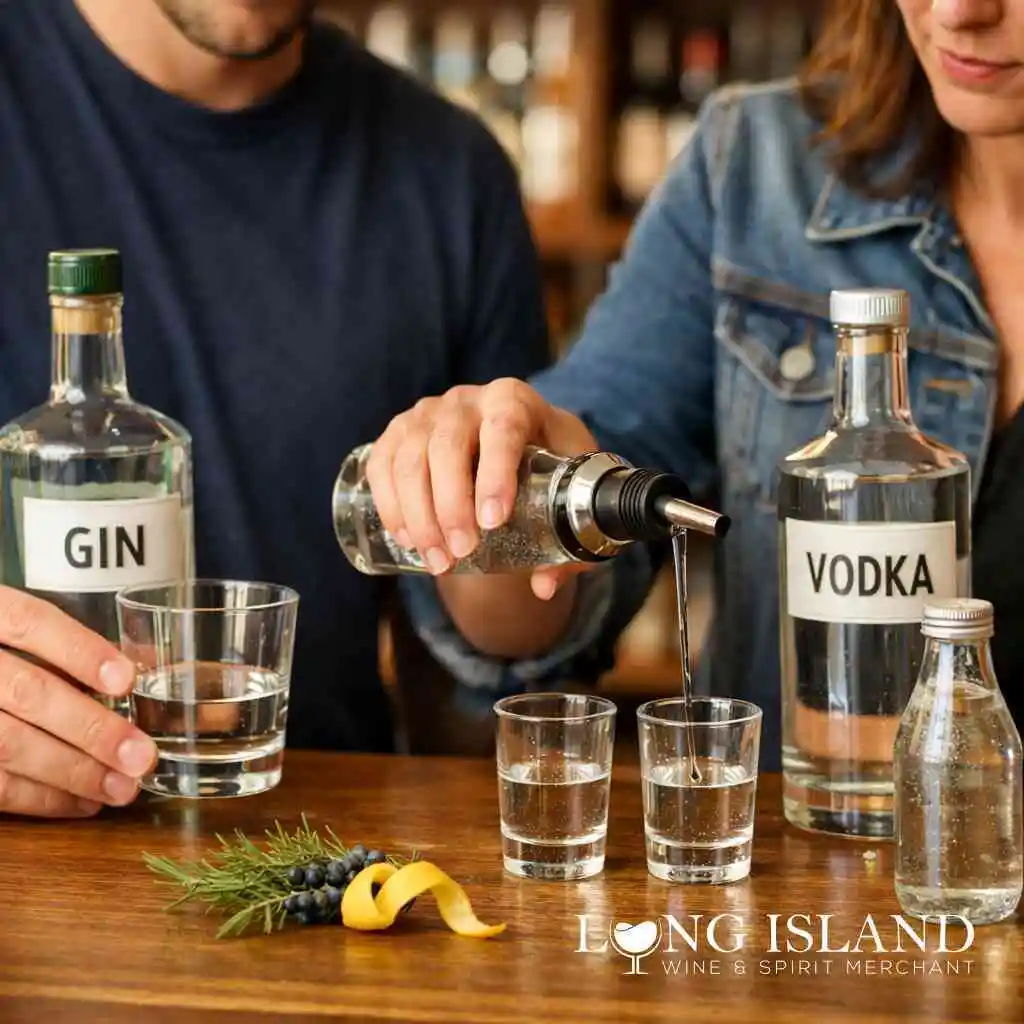
That is why one is not better than the other. They solve different problems. If you want a drink that tastes like a composed recipe, gin and tonic is often the better fit. If you want something that disappears on a hot porch in summer, vodka soda does the job. For people comparing vodka vs gin for classic cocktails, this is usually where the answer becomes personal.
How Negroni ingredients change the conversation between vermouth, bitters, and gin
A Negroni is a great test case because it punishes weak gin and rewards strong gin. The cocktail brings together gin, vermouth, and bitters, so the spirit has to stand up to sweet, bitter, and herbal elements. If the gin is too soft, the drink falls flat. If the gin has the right backbone, the whole glass snaps into place. That is why the balance matters so much. If you are stocking for this style of drink, ten essential bitters for Long Island Liquor Store cocktails is the kind of search that saves time. You want vermouth that tastes fresh, not tired. You want bitters that sharpen rather than overwhelm. And you want gin that can carry both. That is a recipe decision, not just a shopping decision. ### When a martini comparison points you toward gin and when vodka wins the pour
A martini comparison is really a test of preference. Gin wins when you want a cocktail with edges, fragrance, and a little tension. Vodka wins when you want the garnish, the vermouth, or the chill to take center stage. Neither answer is wrong. They just serve different drinkers.
For a clean side-by-side look, the martini comparison between gin and vodka can help you narrow the style. If you like your martini savory and aromatic, gin usually makes more sense. If you like it smooth and minimal, vodka may be the bottle to open. We see that split all the time in Commack, especially when someone is restocking for weekend guests. Taste decides faster than theory does.
Picking the bottle for the moment not the myth
When to reach for small-batch gin craft gin or a classic juniper-forward label
Choose small-batch gin when you want the bottle to say something specific. Maybe you are making cocktails for friends who appreciate a more vivid pour. Maybe you like local craft spirits and want something with a distinct point of view. A classic juniper-forward label is still the safer choice if you want a firm, familiar gin profile. Both can be excellent. The right bottle depends on the drink.
On the projects we help with most often, people are really choosing between quiet confidence and bold character. Small-batch gin can feel layered and expressive. A classic label can feel cleaner and easier to mix. If you want to explore a broader selection, a how to build a home bar with Long Island Liquor Store guide is useful when you want more than one style. That is especially helpful for home bar planning.
Why vodka is still the safer move for big parties wedding alcohol and corporate gifts
Vodka remains the safer move for crowds because it offends fewer palates. It slips into punch, citrus drinks, and simple highballs without asking for attention. That makes it ideal for wedding alcohol, office gifts, and larger group settings where you cannot predict every taste. It also helps when you are buying for mixed-age gatherings with different preferences. In those moments, practical beats romantic.
For party planning for wedding alcohol and corporate gifts, vodka usually gives you the broadest utility. It is easy to pair with juices, soda, or flavored mixers. It also keeps the bar line moving. If you are building a list for a home event, that versatility matters. Nobody wants to overthink the second round.
How home bar essentials shift when you want easy summer cocktails or holiday spirits
Your home bar changes with the season. In summer, you may reach for gin if you want botanicals in a spritz or tonic. You may choose vodka if you want cold, simple drinks that disappear quickly at a barbecue. In colder months, the bar often shifts toward holiday spirits, richer mixers, and bottles that fit lower, slower sipping. That is where planning helps.
If you are wondering how to build a home bar with gin and vodka, start with the bottles you will actually use. Add one versatile gin, one reliable vodka, a good vermouth, and bitters. Then build from there. That simple structure covers a lot of ground, from July cookouts near Sunken Meadow to winter dinners along Route 25A.
What to look for if you care about mixology supplies bitters vermouth and prep cocktails
A serious home bar is not just bottles. It is also glassware, ice, measurement tools, and the right mixers. If you care about mixology supplies, pay attention to bitters and vermouth first. Those two ingredients change more cocktails than most people expect. Fresh vermouth matters especially, because it fades faster than spirits do. That small detail separates a decent drink from a memorable one.
When you are prepping cocktails, ask yourself what role the base spirit should play. Gin can be the main voice. Vodka can be the clean canvas. Either way, good prep matters more than fancy garnish. If you want a useful shopping plan, Long Island Liquor Store can help you match the bottle to the recipe, not just the label to the shelf.
The smarter Long Island buying play before you order your next bottle
How a Commack liquor store can help you choose between gin and vodka without guessing
A good Commack liquor store does more than ring up bottles. It helps you avoid buying the wrong style for the drink you want to make. That matters when you are choosing between gin and vodka for a specific event, gift, or recipe. If you are comparing bottles in person, you can ask about botanicals, texture, and cocktail use without guessing. That saves money and frustration.
For shoppers who want a more direct path, the Commack liquor store guide for gin and vodka shopping can point you in the right direction. The best advice is usually simple. Tell us the drink, the occasion, and how bold you want the spirit to feel. Then we can help you narrow it down quickly.
When online liquor store ordering curbside pickup or 50-state shipping makes sense
Online liquor store ordering makes sense when your schedule is tight or your list is long. Curbside pickup is helpful when you are already on the move in Commack. 50-state shipping matters for gifts and out-of-state recipients, but always check current rules before you order, because alcohol laws vary by state. That is the honest answer, and it saves trouble later.
If you prefer to plan ahead, how to order alcohol online from Long Island Liquor Store can simplify the process. It is especially useful before holidays, weddings, or backyard weekends. You get the bottle you want without circling parking lots. And if you are near Smithtown, Huntington, or the larger Long Island corridor, that convenience adds up fast.
Why price match senior discount and veteran discount matter when stocking a home bar
Value matters, especially when you are stocking more than one bottle. Price match policies help you avoid overpaying if you have already compared options. Senior discount and veteran discount programs can make a real difference for repeat shoppers. Those details do not change the spirit inside the bottle, but they do change the final decision. Smart buyers notice that.
On Long Island, people often build a bar gradually. They add a gin for tonic, a vodka for guests, then a few mixers and a bottle of vermouth. That approach keeps spending under control. It also gives you room to try better labels when you are ready. Saving a little on basics means you can spend more on the bottles that matter most.
What to pair with steak what to pour for New Year s champagne alternatives and which next bottle to explore at Long Island Liquor Store
If you are pairing with steak, vodka is rarely the star. Gin can work in a cocktail before dinner, but bold reds usually suit the meal better. For wine pairing with steak, many Long Island drinkers still reach for cabernet or pinot noir, depending on the cut. If you want New Year’s champagne alternatives, prosecco is often the easier crowd-pleaser, while champagne brings more structure and depth. Those choices matter when the table is full and time is short.
For a broader mix of options, Long Island Liquor Store can help with everything from craft spirits to vodka and gifts. If you are building a home bar, or just want one bottle for a smarter martini, start with the drink you actually want to pour. Then ask for the style that fits it best. You do not need to solve the whole shelf tonight. Start with the bottle that matches your next gathering, and let the rest follow.
Frequently Asked Questions
Question: What is the difference between gin and vodka for 2026, and how do I choose the right bottle at Long Island Liquor Store?
Answer: The biggest difference between gin vs vodka is flavor. Vodka is usually made to be a neutral spirit, which means it stays clean, smooth, and quiet in cocktails. Gin is built around gin botanicals, with juniper-forward gin leading the way and adding piney, citrusy, or floral notes depending on the bottle. If you want a spirit that blends into mixers, vodka is usually the better fit. If you want a bottle that adds character to classic cocktails like a gin and tonic or a martini comparison with more aroma, gin is the stronger choice. At Long Island Liquor Store, we can help you compare spirit base differences and pick the style that fits your recipe, your home bar essentials, or your party planning needs.
Question: What is gin made from, and how do gin botanicals affect drinks like Negroni ingredients and gin cocktail recipes?
Answer: Gin starts from a distilled spirit base, then gets its signature flavor from botanical distillation. The most important botanical is usually juniper, but many bottles also include citrus peel, coriander, angelica root, spice, and floral notes. That is why what gin is made from is really a question about both the base spirit and the botanicals added after distillation. These ingredients matter a lot in drinks like a Negroni, where gin has to stand up to vermouth and bitters, or in gin cocktail recipes where the aromatics are the main attraction. If you are building out mixology supplies, Long Island Liquor Store can help you choose from London dry gin, craft gin, or small-batch gin depending on how bold you want the glass to taste.
Question: What is vodka made from, and when should I choose unflavored vodka or flavored vodka for vodka cocktail recipes?
Answer: What vodka is made from depends on the producer. It can be made from grain, potato, corn, grapes, or other fermentable ingredients, but the goal of vodka distillation is usually to create a clean, neutral spirit. That is why unflavored vodka is so useful for vodka cocktail recipes, vodka soda, punch, and simple mixed drinks where you want the mixer to lead. Flavored vodka can be a smart option when you want extra character without switching to gin, but once flavor is added, it is no longer behaving like a purely neutral base. Long Island Liquor Store carries vodka options that work well for home bar essentials, easy summer cocktails, and larger events like wedding alcohol or corporate gifts.
Question: Should I buy gin or vodka for a martini comparison, and what does Long Island Liquor Store recommend for a home bar?
Answer: For a martini comparison, the best choice depends on the kind of drinker you are. Gin martinis are usually more aromatic, dry, and layered because the gin botanicals stay present from the first sip to the finish. Vodka martinis are cleaner, smoother, and more minimal, which lets vermouth and garnish take center stage. If you like a cocktail with edges and fragrance, gin is usually the better pick. If you want something crisp and simple, vodka is the safer move. For a balanced home bar essentials setup, Long Island Liquor Store often suggests one reliable gin, one dependable vodka, good vermouth, and bitters so you are ready for classic cocktails, easy summer cocktails, and holiday spirits without overbuying.
Question: Can Long Island Liquor Store help with online liquor store ordering, curbside pickup, and 50-state shipping for gin, vodka, and gifts?
Answer: Yes, Long Island Liquor Store is built to make shopping easier whether you are in Commack, nearby in Suffolk County, or ordering from farther away. If you need a local Commack liquor store experience, curbside pickup can be a practical option. If you prefer to shop from home, the online liquor store experience helps you browse gin, vodka, craft spirits, fine wine, champagne, prosecco, and gift baskets without guessing. For out-of-state gift giving, 50-state shipping may be available depending on current laws and destination rules, so it is always best to check before placing an order. This makes it easier to plan for corporate gifts, wedding alcohol, New Year’s champagne alternatives, or a last-minute restock for your bar.
Question: What other spirits and shopping benefits does Long Island Liquor Store offer besides gin and vodka?
Answer: Long Island Liquor Store is more than a place to compare gin vs vodka. Customers also shop for rum, cordials, champagne, prosecco, organic wine, biodynamic wine, natural wine, rosé, cabernet, pinot noir, chardonnay, sauvignon blanc, sake, beer kegs, craft beer, tequila, mezcal, cognac, rare whiskey, small-batch bourbon, single malt scotch, and more. The store also supports party planning, wedding alcohol, corporate gifts, bottle engraving, alcohol delivery, and price match opportunities when applicable. Seniors and veterans may also benefit from special discounts when available. Whether you are building a home bar, looking for mixology supplies, or searching for the right bottle for wine pairing with steak, Long Island Liquor Store aims to be a friendly Commack liquor store resource for Long Island spirits and beyond.


