
The Difference Between Small Batch and Private Label Whiskey
July 5, 2026
You are staring at two whiskey bottles, and both sound impressive. That confusion is normal. The label language can feel slippery, especially if you want rare whiskey for a gift, a dinner, or your own shelf. At Long Island Liquor Store, we hear this question from Commack shoppers all the time. The short answer is simple: small batch describes how whiskey was made, while private label describes who commissioned or owns the brand.
Why small batch and private label whiskey are not the same bottle in your hand
The clue most buyers miss when a label says small batch or private label
Small batch usually points to a limited number of barrels blended together. It does not guarantee a tiny distillery or a specific flavor profile. Private label means a store, importer, or company put its own name on the bottle. That brand may use sourced whiskey, contract distilling, or a blend built to match a house style. Here is the part most buyers miss: the label can sound artisanal even when the production path is very different.
If you are reading this because whiskey shopping feels oddly frustrating, that makes sense. Most people want a bottle that feels special without getting tricked by marketing. A small-batch label can still come from a large producer. A private-label bottle can still taste excellent. The key is learning what each term promises, and what it leaves out.
How a whiskey can taste premium without being made the same way
A premium taste does not always come from the same production story. It comes from balance, barrel quality, aging, and blending decisions. Some private label bourbon drinks beautifully because the bottler chose the right barrels at the right proof. Some small-batch bourbon wins because the distiller selected a tight group of barrels with consistent character. The experience in the glass matters more than the romance on the front label.
One client in Smithtown wanted something “fancy” for a dinner with steak, roasted mushrooms, and charred scallions. We poured three styles side by side. The private-label bottle had a deeper caramel note, while the small-batch bottle showed brighter spice. The guest who disliked “whiskey heat” preferred the private label. The person who liked rye-like grip went for the small batch. That is the real lesson: taste tells the truth faster than branding.
Why Commack shoppers asking for rare whiskey should care about the distinction
If you are hunting for whiskey vs bourbon difference for buyers, the label distinction helps you shop smarter. Rare whiskey is not always the oldest or the loudest bottle. Sometimes it is a carefully chosen barrel selection with a strong proof point and a clean finish. Sometimes it is a private-label release with a tiny run and a good warehouse pick. On Long Island, that matters because customers want value, story, and a bottle that actually fits the occasion.
Commack shoppers often ask for something that feels like a find, not just a purchase. That is fair. A bottle for a Father’s Day dinner, a Hamptons weekend, or a quiet night near Route 25A should feel intentional. Yet the best choice depends on flavor, not buzz. If you are comparing small batch whiskey and private label whiskey, start by asking what was blended, where it was distilled, and whether the bottle was made to sip or to gift.
What the label really tells you about craft spirits and limited releases
The label is a clue, not a full biography. Craft spirits and limited releases often use familiar language because scarcity sells. Still, the useful details are elsewhere: mash bill, age statement, proof, distillery name, and any mention of single barrel or cask strength. Those details help you judge whether the bottle leans rich, spicy, smooth, or bold. They also reveal whether the whiskey was designed for a collector, a cocktail, or a straight pour.
For a deeper look at terminology, distilled spirits and liquor labeling basics can help, though it should never replace a real bottle-side conversation. The best approach is to read the label like a map. Follow the clues. Ignore the hype. That habit will save you money and disappointment, especially when you want a bottle for gifting or a small stash at home.
The production trail from mash bill to bottling line
How the whiskey mash bill shapes body, sweetness, and spice
The whiskey mash bill is the grain recipe. It usually includes corn, rye, wheat, and malted barley in different ratios. More corn often brings sweetness and roundness. More rye usually adds pepper, lift, and a drier finish. Wheat can soften edges and make the whiskey feel smoother on the palate.
This is where a lot of buyers get surprised. Two bottles can look similar and taste very different because the mash bill pushed them in different directions. If you are building a home bar, knowing the grain mix helps you choose the right bottle for sipping or mixing. It also explains why one whiskey feels plush with caramel and another feels brisk with baking spice. That detail matters whether you want how to choose whiskey for sipping or mixing or just a dependable pour for guests.
Where whiskey aging process changes the final mood of the bottle
The whiskey aging process is where the spirit starts to gain its personality. Time in oak can build vanilla, toast, tobacco, baking spice, and dried fruit notes. Heat and seasonal swings move the whiskey in and out of the wood, shaping texture and color. In a good barrel, that interaction creates depth. In a tired barrel, it can flatten the spirit or make it bitter.
What we have seen this year is that shoppers care more about texture than ever. They ask for “something smooth” or “something with a little smoke” more often than they ask for age alone. That is a smart shift. Age can help, but it is not magic. A younger whiskey with a strong barrel and good proof can beat an older bottle that lost its spark somewhere in storage.
When barrel selection matters more than the brand name on the front
Barrel selection is where many good whiskey programs separate themselves. A skilled buyer can choose barrels with the right balance of sweetness, oak, and spice. That choice can matter more than the logo on the neck. It also explains why some single barrel whiskey and blended whiskey programs taste polished even when the brand is unfamiliar. The front label may be new. The liquid inside may be excellent.
One couple in Huntington came in looking for a bottle to serve after a winter dinner with braised short ribs. They assumed the most famous name would be safest. Instead, we walked them through two barrel picks and one blended option. The blended whiskey won because it had enough sweetness for the sauce and enough spice for the meat. That kind of decision is where a real whiskey selection guide earns its keep.
How contract distilling and sourced whiskey show up in private label bourbon
Private labels often rely on contract distilling and sourced whiskey basics. That simply means one company makes the whiskey, and another company bottles or brands it. This is common in the industry. It is not automatically bad. In fact, many respected bottles start with sourced spirit and end with careful blending and bottling decisions.
Private label bourbon may come from a large distillery, then get selected, proofed, and packaged for a store or group. That can be ideal for corporate gifts, house pours, or curated gift baskets. It also explains why two private-label bottles can taste nothing alike. The sourcing is only one part of the story. The real result comes from the person selecting the barrels and deciding how much to reveal on the label.
Why single barrel whiskey, blended whiskey, and cask strength whiskey send different signals
These phrases are useful, but only if you read them correctly. Single barrel whiskey comes from one barrel, so it often shows sharper individuality. Blended whiskey combines multiple whiskeys for consistency and balance. Cask strength whiskey or barrel proof bottles arrive with little or no dilution, so the proof stays bold and the flavor can feel intense.
Here is a simple comparison:
StyleWhat it suggestsBest forSingle barrelDistinct barrel characterSipping, gifts, collectorsBlended whiskeyConsistency and balanceHosting, mixed drinksCask strengthFull proof and powerEnthusiasts, slow poursThat table is the practical shortcut. You do not need to memorize jargon. You only need to know what kind of drinking moment you are planning.
What private label whiskey is really doing for stores, gifts, and events
Why retailers use private label bourbon to build a signature house style
Private label bourbon helps a store create identity. It lets a retailer shape a house style that feels personal to regular customers. That can mean a softer profile for easy sipping, a spicier profile for cocktail fans, or a richer oak note for gift buyers. For a Commack liquor store, that matters because customers often want guidance, not guesswork.
Private labels also help stores match local taste. Long Island buyers often enjoy bottles that feel polished but not overly showy. That is a real preference. It shows up in requests for holiday spirits, New Year’s champagne, and bottles that work for everything from backyard dinners to office gifts. A strong house label can deliver that consistency.
How custom whiskey blends fit corporate gifts and premium whiskey gifts
Custom whiskey blends work well when the bottle needs to feel deliberate. For premium whiskey gifts, the liquid matters, but so does presentation. A custom blend can look polished without feeling generic. It also gives companies a way to make a holiday gesture feel more thoughtful than a standard shelf pick. That is why private label bourbon for gifts and events is such a useful concept for offices, teams, and client thank-yous.
A small brokerage on Long Island once wanted corporate gifts that felt warm, not flashy. They were pairing the whiskey with gift baskets and bottle engraving. We suggested a smoother, lower-heat bottle with vanilla and oak, since most recipients would not be whiskey collectors. That choice landed well because it was easy to appreciate, even for casual drinkers. The right custom blend can do that. It lowers the barrier without lowering the quality.
When collectable whiskey bottles matter more than shelf hype
Collectable bottles can be exciting, but they are not always the best purchase. Sometimes the bottle is impressive because of limited release status, special packaging, or a distillery collaboration. Other times it is valuable because collectors already chase it. Still, shelf hype can hide a mismatch between price, flavor, and use case. If you want to open the bottle, not just display it, you should care more about the pour than the buzz. 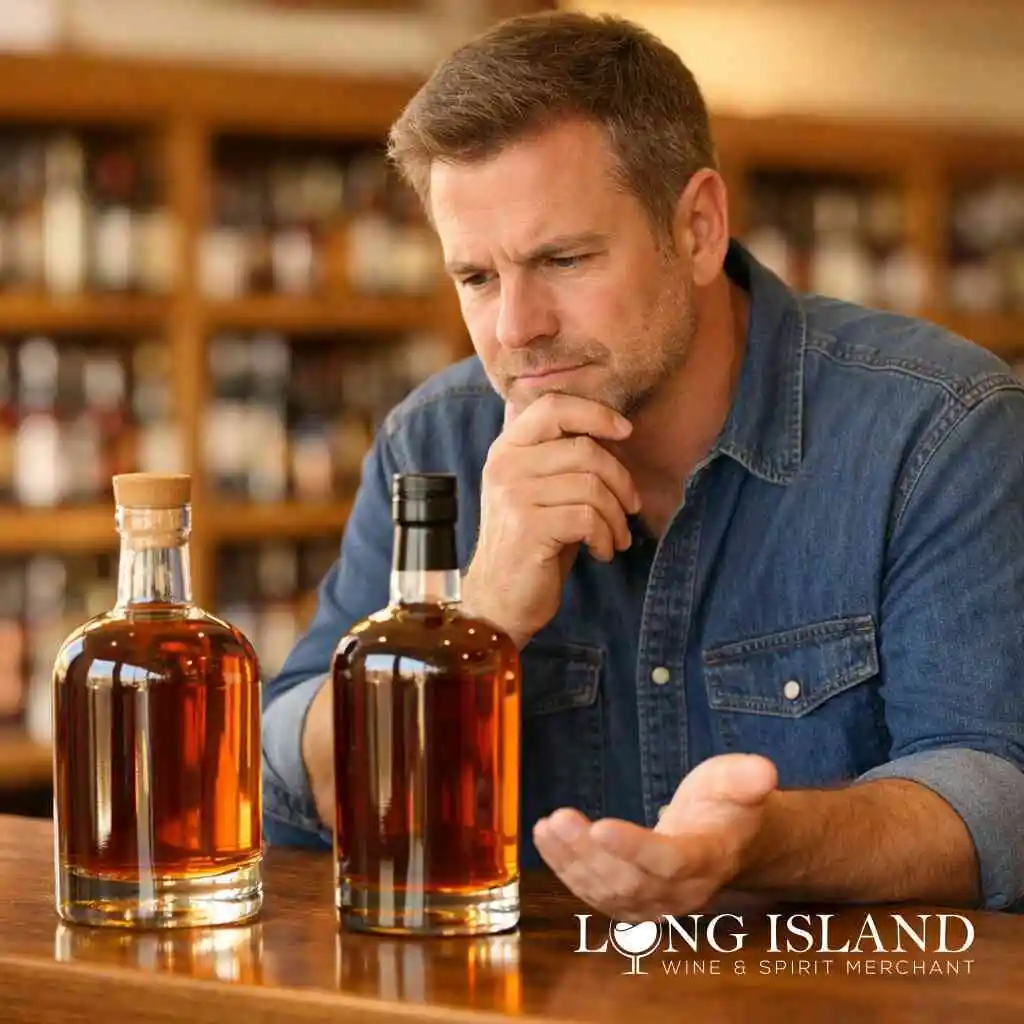
This is especially true around rare whiskey and celebratory purchases. A bottle that looks stunning on a shelf may not be the best match for a dinner or a toast. On the other hand, a modest-looking release can surprise you with real depth. The smartest buyers ask one question: will I drink this, gift this, or keep this sealed? That answer changes everything.
How small batch whiskey plays into wedding alcohol and party planning
Small batch whiskey is popular for wedding alcohol and party planning because it feels premium without being intimidating. Guests usually appreciate a bottle that tastes balanced and familiar. You do not need the most aggressive barrel proof pour for a mixed crowd. You need something that works in a toast, over ice, or in a simple whiskey sour with bitters and vermouth. For larger events, consistency matters. Small batch bourbon can deliver that better than some highly individualized barrel picks. It gives you a clear flavor lane, which helps when you are buying for dozens of people with different palates. If you are sorting through craft spirits and limited release whiskey trends, think about the event first. Then choose the bottle. ### Why Long Island buyers often compare private label whiskey with local distillery releases
Long Island shoppers like to compare private-label whiskey with local distillery releases because both can tell a regional story. North Fork wines get the attention, but Long Island spirits have their own loyal following. Some buyers want a bottle tied to the island’s taste. Others want a familiar profile with a local finish. That is why people ask about whiskey selection in Commack, New York and then pivot to nearby distillery bottles.
Local flavor matters. A bottle picked for a backyard cookout near Sunken Meadow may not be the same bottle you want for a quiet tasting in Huntington. That is not indecision. That is good buying. It shows you are matching the spirit to the moment.
How to read a whiskey shelf without getting fooled by the marketing
The difference between whiskey labeling differences and true production scale
The shelf tells a story, but not always the full one. Whiskey labeling differences can signal style, proof, age, or bottle source. They do not always reveal production scale. A small batch label can still come from a sizable operation. A private label bottle can still be carefully chosen. The real question is not “What sounds nicest?” It is “What was actually done to make this whiskey?”
If you are comparing bottles at a Suffolk County wine merchant, ask for the back-story behind the back label. Was it distilled on-site? Sourced? Blended? Bottled at barrel proof? Those answers are more useful than marketing copy. They help you choose with confidence.
What small batch bourbon can mean on a bottle and what it cannot promise
Small batch bourbon can mean thoughtful barrel selection, but it cannot promise a specific taste or scale. One distillery may define “small batch” as a few dozen barrels. Another may use a broader range. That is why you should never treat the phrase as a universal standard. It is a signal, not a law. The bottle still needs to earn your trust.
If you want a deeper primer on small batch whiskey vs private label whiskey, focus on proof, age, and barrel description. Those clues matter more than slogans. You should also look for tasting notes that mention vanilla, oak, pepper, citrus, or dried fruit. Those notes help you judge body and purpose. A bottle for sipping should read differently from a bottle meant for mixing.
How to compare limited releases, rare whiskey, and everyday craft spirits
Limited releases are not all equal. Some are truly scarce. Some are simply seasonal. Some are “limited” because the producer moved the bottling into a special package. Rare whiskey can be special because of age, barrel choice, or market demand. Everyday craft spirits can be the better buy when you want value and repeatability.
A practical framework helps:
- Rare whiskey: best when you want a gift or collector appeal.
- Limited releases: best when the bottling story matters.
- Everyday craft spirits: best when you want reliable flavor and easy replacement.
- Small-batch bourbon: best when balance and subtle distinction matter.
That is the shelf test we use with customers all the time. It keeps the purchase grounded in purpose, not FOMO.
Why best scotch under 100 is a value search and not a style category
The phrase best scotch under 100 in Commack, New York is really a shopping goal, not a style. It means you want value, quality, and the right bottle for your palate. It does not tell you whether you want smoky Islay character, creamy Speyside notes, or a balanced single malt scotch with gentle oak. That is why price alone never solves the problem.
If you are buying scotch for a friend, think about their food habits and drinking style. A peat lover may want smoke and brine. A beginner may prefer honey, apple, and vanilla. The same logic applies to bourbon, cognac, tequila, mezcal, vodka, gin, rum, cordials, champagne, prosecco, and even sake. Category matters. Taste matters more.
How whiskey tasting notes help you judge whether a bottle is built for sipping or mixing
Whiskey tasting notes and whiskey selection guide language are some of the fastest ways to shop well. Look for words like caramel, toasted oak, baking spice, cinnamon, fruit, pepper, smoke, or leather. Softer notes often point to sipping ease. Brighter spice or higher proof can make a bottle better for cocktails. A strong finish can help in a drink with bitters, vermouth, or amaro.
Here is the simplest rule: the more assertive the whiskey, the more you should think about dilution and mixing. The softer and rounder the whiskey, the more it can shine neat. That same idea works when you are building a home bar or picking summer cocktails for a group. You do not need to be a collector to read the clues well.
The bottle you should choose next based on what you are serving tonight
Which bottle works best for home bars, summer cocktails, and mixology supplies
Your bottle choice should match the room, the food, and the glass. For home bars, you usually want one versatile whiskey, one bolder pour, and one bottle that disappears nicely into cocktails. If you are stocking home bar setup and mixology supplies, keep bitters, vermouth, and amaro close by. Those small details stretch a whiskey bottle much further.
Summer cocktails ask for brightness and balance. A softer bourbon, a rye-forward whiskey, or a smooth blended whiskey can all work well. If you are building a bar near Commack, you might also want vodka, gin, rum, tequila, and mezcal for guests who want options. That mix keeps hosting simple. It also makes one bottle purchase feel like a smarter system.
How to pair whiskey with steak, holiday spirits, or a quiet night at home
Whiskey and steak is a classic pairing because fat and char handle oak and spice so well. A richer bourbon can stand beside a ribeye. A smoky single malt scotch can match grilled meat with confidence. For holiday spirits, you may want something warm and aromatic, especially if you are serving cider, nuts, or dark chocolate. On a quiet night, the best bottle is often the one that tastes balanced without demanding attention.
Think about mood as much as flavor. A bold pour fits a celebration. A mellow pour fits a late night. A great bottle respects the moment instead of taking it over. That is true whether you are opening a bottle in Huntington, Smithtown, or after a drive down Route 25A.
When to buy small batch whiskey for gifting and when private label makes more sense
Buy small batch whiskey when you want the bottle to feel unmistakably whiskey-forward. Buy private label whiskey when you want the bottle to feel personal, curated, or tied to a store or event. For whiskey for gifting and holiday spirits in Commack, New York, the decision often comes down to the recipient. Collectors usually enjoy distinctive small-batch releases. Casual drinkers often appreciate a smoother private-label bottle that is easy to enjoy.
If you are sending corporate gifts, private label can feel especially polished. If you are buying for a friend who already tracks limited releases, small batch may be the better conversation piece. Both can be excellent. The trick is to match the bottle to the person, not the other way around.
How Commack liquor store shoppers can use curbside pickup, online liquor store ordering, or 50-state shipping
Local convenience matters. Many shoppers want the ease of an online liquor store with the reassurance of a real Commack counter. Curbside pickup helps when your schedule is tight. Shipping can help when you are sending a gift far away, though you should always check compliance with state laws and current shipping rules. For Long Island Liquor Store, that means serving Commack, Suffolk County, and beyond with care and clarity.
If you need a bottle for tonight, order early enough to avoid stress. If you are planning a wedding, holiday gathering, or corporate gift run, give yourself more room. You do not need to solve the whole bar at once. Start with the bottle that matters most.
What to look for next at Long Island Liquor Store when you want whiskey selection guide clarity and a smarter purchase
The smartest whiskey shopper asks for guidance, not just inventory. That is where a real whiskey selection guide helps. At Long Island Liquor Store, the goal is to match you with bottles that fit your taste, your budget, and your occasion. That could mean a smoother bourbon, a bold single malt scotch, a gift-ready private label, or a limited release worth opening with friends.
If you are stuck, bring the occasion into the conversation. Mention the food, the guests, or the gift. We can help you narrow the field fast. And if you are shopping in Commack, you can keep it simple: pick the bottle, check the pairing, and place the order for pickup or shipping. You do not have to figure this out alone, and you do not have to figure it all out today. Start with one bottle that makes sense.
Frequently Asked Questions
Question: What is the difference between small batch whiskey and private label whiskey in The Difference Between Small Batch and Private Label Whiskey?
Answer: Small batch whiskey usually means the whiskey was blended from a limited number of barrels, while private label whiskey means the bottle is branded for a store, importer, or company that commissioned it. At Long Island Liquor Store, we help shoppers in Commack, New York understand those whiskey labeling differences so they can choose with confidence. A small-batch bourbon may highlight barrel selection and consistency, while private label bourbon may focus on a house style, custom whiskey blends, or a gift-ready presentation. The best choice depends on the moment: rare whiskey for a collector, premium whiskey gifts for an occasion, or a smooth pour for everyday sipping. If you are comparing bottles for whiskey for gifting, corporate gifts, or holiday spirits, our team can help you read the label beyond the marketing and focus on mash bill, proof, age, and tasting notes.
Question: How do I know whether a small-batch bourbon or private label whiskey is better for sipping, mixing, or summer cocktails?
Answer: The easiest way is to look at the whiskey’s proof, mash bill, and tasting notes. A softer bourbon with more corn and gentler oak can be excellent for sipping neat or over ice, while a spicier rye-leaning whiskey or cask strength whiskey may shine in summer cocktails and mixology supplies like bitters, vermouth, and amaro. Private label whiskey can be surprisingly polished when the bottle was selected carefully, and small-batch bourbon often delivers balanced flavor that works well for guests with different preferences. If you are building a home bar in Commack or nearby Suffolk County, Long Island Liquor Store can help you choose bottles that fit both straight pours and cocktails. We also carry a wide range of spirits like vodka, gin, rum, tequila, mezcal, cognac, champagne, prosecco, and cordials so you can stock for any occasion without guessing.
Question: Can Long Island Liquor Store help me pick rare whiskey, limited releases, or collectable whiskey bottles for gifts and events?
Answer: Yes, and that is one of the most common reasons customers visit a Commack liquor store like ours. Rare whiskey and limited releases can make excellent premium whiskey gifts, especially when you want the bottle to feel special for a birthday, wedding alcohol table, retirement gift, or client thank-you. We help shoppers compare collectable whiskey bottles based on style and purpose, not just hype. Some people want a bold single barrel whiskey or barrel proof whiskey for an enthusiast. Others want a smoother private label whiskey for someone who enjoys easy sipping. If you are planning corporate gifts, gift baskets, or a celebration with wine tasting events and spirits pairings, we can help you select a bottle that feels thoughtful and appropriate rather than random.
Question: What should I look for on the label when comparing whiskey production methods, whiskey mash bill, and whiskey aging process?
Answer: Start with the distillery name, proof, age statement if available, and any mention of single barrel whiskey, blended whiskey, cask strength whiskey, or barrel proof whiskey. Those details reveal a lot about whiskey production methods. The mash bill tells you the grain recipe and can hint at sweetness, spice, or body, while the whiskey aging process shows how much oak influence and depth the bottle may have developed. At Long Island Liquor Store, we often remind customers that the front label only tells part of the story. If you are shopping for rare whiskey, small-batch bourbon, or a bottle for whiskey vs bourbon difference comparisons, ask us to walk you through the label like a map. That approach is especially helpful for shoppers who want a bottle for sipping, gifting, or building a home bar with confidence.
Question: Does Long Island Liquor Store offer convenient options like online liquor store ordering, curbside pickup, Commack NY alcohol delivery, or 50-state shipping?
Answer: Yes. Long Island Liquor Store is set up to make shopping easier whether you are nearby in Commack, shopping from elsewhere on Long Island, or sending a bottle farther away. Customers can use our online liquor store experience to browse selections, then choose curbside pickup or alcohol delivery options when available and appropriate. We also offer 50-state shipping where permitted by law, which is helpful for whiskey for gifting, holiday spirits, New Year’s champagne, Valentine’s wine, corporate gifts, and last-minute party planning. If you are stocking up on craft spirits, fine wine, or Long Island spirits for a wedding, backyard gathering, or dinner with wine pairing for steak, we aim to make the process simple, friendly, and reliable. When you are unsure what to buy, we are happy to help you narrow it down by flavor, occasion, and budget so you can make a smart purchase the first time.


