
How to Build a Home Bar with 10 Essential Bottles
October 30, 2026
The best way to build a home bar is to start with 10 versatile bottles that cover the drinks you actually make: vodka, gin, rum, tequila, bourbon, rye, single malt scotch, cognac, vermouth, and a good sparkling wine or Champagne. That mix gives you martinis, old fashioneds, margaritas, stirred drinks, and celebration pours without clutter.
If you are standing in your kitchen at 11 p.m. wondering what to buy first, that feeling is common. Most people stock too quickly, then end up with three bottles they never open and none of the staples they need on a Saturday night. A smart home bar is about flexibility, not volume.
Key Takeaways
- A strong home bar starts with 10 flexible bottles, not a crowded shelf of random labels.
- The backbone spirits are vodka, gin, rum, tequila, and bourbon because they cover the widest range of classic cocktails.
- Add rye, single malt scotch, cognac, vermouth, bitters, amaro, and sparkling wine to make the bar feel complete.
- Quality beats hype: look for real style cues, not just marketing terms like small-batch or limited release.
- Build around the people you host, then keep your shelf ready with online ordering, curbside pickup, or local delivery when available.
-
Which 10 bottles can actually carry a home bar without turning it into clutter
A useful home bar starts with bottles that can do more than one job. If you want a setup that handles martinis, old fashioneds, margaritas, and easy weekend hosting, choose spirits with broad cocktail use and one or two bottles for sipping. That keeps your shelf lean and practical.
Why the smartest home bar starts with flexible spirits instead of a huge shelf
A small, well-chosen collection is easier to use, easier to store, and easier to enjoy. The goal is to cover the drinks you reach for most often, not to chase every trend on the shelf. For many homes, that means a core built around vodka, gin, rum, tequila, bourbon, rye, scotch, cognac, vermouth, and sparkling wine. If you want a broader plan, our home bar guide is a helpful place to start.
How to choose bottles that cover martinis, old fashioneds, margaritas, and weekend hosting
Think in cocktail families. Vodka and gin cover crisp drinks. Rum and tequila handle highballs and summer pours. Bourbon and rye anchor stirred cocktails. Cognac and scotch add sipping depth. Vermouth and bitters make the whole bar work. A bottle like Champagne or Prosecco gives you a brunch and celebration option without taking up much room.
BottleMain useWhy it earns shelf spaceVodkaMartinis, mixed drinksClean, adaptable baseGinMartinis, NegronisBotanical characterRumDaiquiris, mojitosSweet, bright, flexibleTequilaMargaritas, PalomasFresh agave profileBourbonOld fashioneds, sippingRich, crowd-friendly### What Long Island hosts in Commack and across Suffolk County usually overlook when they stock too fast
People often buy too many specialty bottles before they buy the building blocks. That is how you end up with a shelf full of novelty spirits and no vermouth for martinis. Around Commack, Huntington, and Smithtown, we usually see hosts do better once they slow down and buy for the drinks they actually serve. If you are shopping in person, a Commack liquor store can help you narrow the list fast.
-
Why vodka, gin, rum, tequila, and bourbon are the backbone of nearly every good pour
These five bottles carry most home bars because they solve most entertaining problems. Vodka, gin, rum, tequila, and bourbon cover the widest range of classic cocktails, and each one brings a different texture and flavor. That gives you enough range for a dinner party, game night, or a quiet pour after work.
The role each bottle plays in classic cocktails and easy crowd-pleasers
Vodka is the clean mixer. Gin brings botanicals for martinis and refreshing long drinks. Rum works for mixed drinks that need sweetness and lift. Tequila handles margaritas and citrus-driven cocktails. Bourbon gives you a rich base for old fashioneds and boulevardiers. For bottles and pairing ideas, the category guide is a practical reference.
How to tell when to choose a clean mixer spirit versus something with more character
If the drink depends on mixers, choose a clean spirit. If the drink is spirit-forward, choose one with a clearer personality. For example, vodka should stay neutral for cocktails, while gin should show enough juniper and citrus to stand up in a martini. For tequila, look for a profile that tastes like real agave, not just heat. The same logic works for rum and bourbon.
Why small-batch bourbon, craft gin, and agave spirits give your bar more range than random bottles
A small-batch bourbon can give your old fashioned more depth. A craft gin can make a martini or Negroni more interesting. A good tequila or mezcal can move from margaritas to sipping without feeling flat. The benefit is range, not prestige. If you want to compare styles, whiskey basics can help you sort bourbon, rye, and scotch. You can also compare what is the difference between whiskey and bourbon if you are still deciding.
-
Which bottles should come next when you want your bar to feel complete
Once the five core spirits are in place, add rye whiskey, single malt scotch, cognac, vermouth, bitters, amaro, and one sparkling wine. Those bottles turn a decent shelf into a real mixology starter kit. They also make the bar feel ready for sipping, not just mixing.
Why rye whiskey, single malt scotch, and cognac open the door to better sipping and stirred drinks
Rye gives you spice for Manhattans and stronger stirred cocktails. Single malt scotch adds depth for neat pours or a slow after-dinner drink. Cognac bridges sipping and cocktails, especially when you want something polished but not heavy. If you are choosing between bottles, a whiskey-focused page is a smart way to compare styles without overbuying.
How vermouth, bitters, and amaro turn a basic setup into a real mixology starter kit
These are not extras. They are the tools that make cocktails taste finished. Vermouth builds martinis and Manhattans. Bitters sharpen sweetness and add structure. Amaro can work as an aperitif or after-dinner pour. Keep them fresh, store them well, and use them often. A bottle of vermouth and amaro can do more than many full bottles of spirits.
When Champagne, Prosecco, and wine belong in the home bar for celebrations and pairing
Sparkling wine belongs in almost every home bar because it covers toasts, brunches, and simple aperitifs. Champagne brings formality. Prosecco brings easy hosting. Wine rounds out the bar for guests who do not want spirits. On Long Island, sparkling bottles are especially useful for weddings, birthdays, and holiday dinners. If you are building gift sets too, the gifts page is worth a look.
-
What makes a bottle worth the shelf space and what is just marketing noise
A bottle earns shelf space when it has a clear purpose, good balance, and repeat use. Terms like single malt, small-batch, limited release, organic, and natural wine can signal quality, but they are not quality by themselves. The label matters less than how the bottle tastes in your glass.
How to read style clues like single malt, small-batch, limited release, organic, and natural wine
Single malt means the whisky comes from one distillery and uses malted barley. Small-batch usually means a limited production run, though the term is not standardized. Limited release can be useful if you enjoy unique profiles, but it should not be the only reason to buy. For wine, organic, biodynamic, and natural each mean something different, and the best choice still depends on your taste.
Why terroir matters for cabernet, pinot noir, chardonnay, and sauvignon blanc
Terroir is the combination of soil, climate, and site. It shapes how grapes taste. Cabernet often shows darker fruit and structure. Pinot noir can be lighter and more delicate. Chardonnay may lean rich or crisp. Sauvignon blanc often brings citrus and herb notes. That is why North Fork wines can feel so distinct from other regions. A wine selection with regional range helps you see those differences clearly.
What to know about mezcal, sake, cordials, and other bottles that add personality without wasting money
Mezcal adds smoke and depth, but it should have a use case. Sake is excellent for lighter food pairings and clean sipping. Cordials can help with dessert drinks or signature cocktails, but only if you make them regularly. Here is what many online guides miss: novelty bottles are fine, but only after your basics are covered. The tequila and mezcal category is a good place to compare agave styles.
-
How to build a bar cart that looks polished and pours well
A polished bar cart is mostly about placement and restraint. Keep the most-used bottles visible, the tools close by, and the glassware simple. If everything has a home, the cart looks intentional and pours better under pressure.
The glassware, tools, and setup moves that make a small space feel intentional
Use a short list: rocks glasses, a stemmed glass, a coupe, a jigger, a shaker, a strainer, and a bar spoon. Add a small tray for bitters and vermouth. Keep the cart from looking crowded by limiting the display to your core bottles. If space is tight, one shelf of bottles and one shelf of tools is enough.
Why bar tools, bitters, vermouth, and mixers should live close together
You should not have to hunt for a jigger while guests wait. Put bitters near vermouth, and keep mixers nearby if you make cocktails often. That small change saves time and keeps the setup calm. For a guide to bottle sizing that helps with storage planning, Liquor Bottle Sizes is a useful reference.
How to organize by cocktail style so entertaining at home feels calm instead of chaotic
Group bottles by use: stirred drinks, citrus drinks, and sipping bottles. That way, you can make a Negroni, a margarita, or an old fashioned without opening every cabinet. A tidy bar cart also helps when you host near Route 25A, where guests may stop by after dinner and want something fast, not fussy.
-
What to pour for steak nights, brunches, and late-summer gatherings on Long Island
Match the drink to the meal. Bourbon and cabernet work with richer food. Rosé, Prosecco, and sauvignon blanc fit lighter fare and outdoor hosting. Champagne, especially, belongs in celebrations and gift moments. The right bottle makes the food taste better and the table feel more complete. ### How to match bourbon, cabernet, and bold reds with richer meals 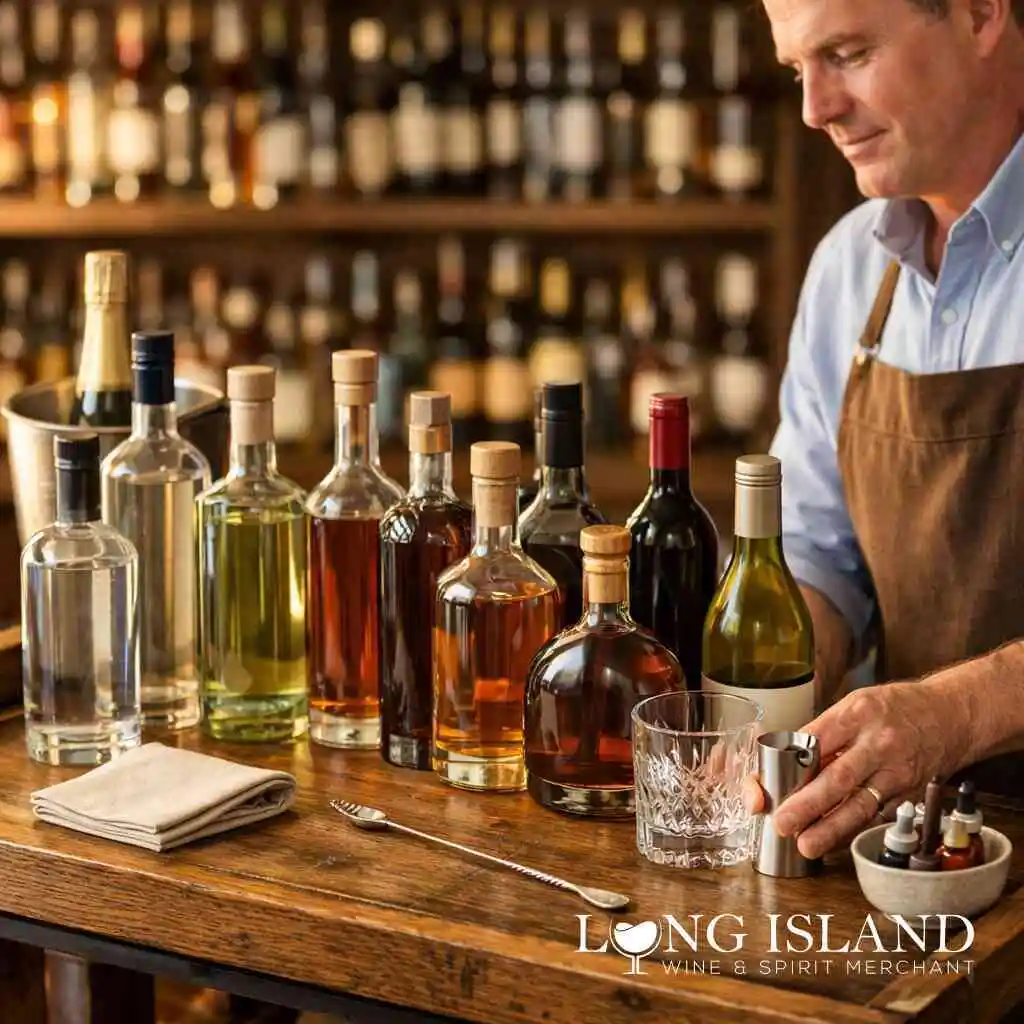
Steak, short ribs, and grilled lamb can handle oak, spice, and tannin. That is where bourbon and cabernet shine. Pinot noir can work with roast chicken or salmon when you want something lighter but still structured. If you are planning a steak night, the old fashioned, cabernet, and pinot noir trio is a safe, satisfying path.
Why rosé, Prosecco, and sauvignon blanc stay useful for North Fork-style summer hosting
Rosé is one of the easiest Long Island hosting wines because it works with salads, seafood, and casual plates. Prosecco fits brunch and spritz-style drinks. Sauvignon blanc stays crisp with shellfish and goat cheese. North Fork rosé has become a natural fit for Long Island gatherings because it feels relaxed without losing freshness.
Which bottles work best for holiday spirits, New Year’s Champagne, and Valentine’s wine
Keep one sparkling bottle ready for toasts and one red or rosé for gifting. Champagne belongs in formal celebration moments. Prosecco is often the better pick for relaxed brunch hosting. For Valentine’s wine, choose something personal and food-friendly rather than flashy. If you want help picking the right bottle, an online liquor store with local pickup can simplify the process.
-
When to choose value over prestige and when the better bottle earns its place
Value matters when you are stocking for a crowd. Prestige matters when the bottle is the gift or the focus of the evening. The right choice depends on purpose, not price alone. That is how you avoid overspending without settling for a flat pour.
How to spot the difference between price hype and real quality in craft spirits and wine
Ignore labels that try too hard and look for balance, texture, and finish. A good craft spirit should taste complete, not just expensive. A good wine should feel balanced, with fruit, acid, and structure in the right place. Independent reviews from respected publications can help, but your own taste matters most.
Why affordable wedding wine and party planning bottles should be chosen differently than gift bottles
For weddings and parties, consistency matters more than rarity. You want bottles that pour well for a crowd and pair easily with food. For gifts, presentation and story matter more. A bottle engraved for a host or bundled in a gift set has more impact than a random splurge.
How to think about price match, senior discount, and veteran discount without losing quality
Discounts can help stretch your budget, but they should never be the only filter. Look for bottles that already fit your menu, then compare value across categories. If a store offers price match, senior discount, or veteran discount, use it to improve the bottle, not to buy more than you need. For service details, check the shipping page before you plan.
-
Why a home bar should be built around the people you actually host
The best home bar reflects your real life. If you host family dinners, game nights, or corporate gifts, your bottle list should match those moments. A good shelf feels personal because it is built around the people who will actually drink from it.
How to shape your bottle list around family dinners, game nights, and corporate gifts
If your house fills up for dinner, stock wine, bourbon, and one easy cocktail. If game nights are more common, add vodka, tequila, and beer. For corporate gifts, keep a few polished bottles and gift baskets ready. That is where a local gifts collection becomes useful.
What changes when you need a bar for wedding alcohol, gift baskets, or bottle engraving gifts
Weddings need scale and consistency. Gift baskets need presentation. Bottle engraving gifts need advance planning. You are not buying for your own shelf anymore; you are buying for other people’s memories. That changes the bottle choices, the quantities, and the packing.
Why mixology supplies and versatile wines matter more than chasing every trend
A new trend is fun for a month. A good set of bitters, vermouth, and a few versatile wines works all year. That is why the most useful bars are usually the simplest ones. They are built for real schedules, not for social media shelves.
-
How to keep your shelves ready for the season instead of scrambling at the last minute
A ready bar is a rotating bar. You restock the basics before they run out, then add seasonal bottles for the kind of entertaining you do most. That keeps you from making a last-minute run when guests are already on the way.
What a smart rotation looks like for summer cocktails, holiday gatherings, and last-minute guests
In warm weather, keep tequila, rum, vodka, rosé, and Prosecco close. For holiday gatherings, stock bourbon, rye, cognac, Champagne, and a fuller red. For surprise visits, keep one neutral spirit, one brown spirit, one sparkling wine, and one white wine in reserve. That mix covers almost every request.
Why Commack NY alcohol delivery, curbside pickup, and online ordering help keep the bar ready
Convenience matters when you are juggling work, family, and hosting. Commack NY alcohol delivery, curbside pickup, and online ordering can save a trip when you need one missing bottle. If you are checking what is open or available, make sure to confirm store details before you leave. For nearby shoppers, a Commack liquor store can be the fastest fix.
How a Suffolk County wine merchant can help you stock for North Fork weekends and Long Island parties
A good local merchant can steer you away from overbuying and toward bottles that fit your plans. That matters for North Fork weekends, backyard parties, and holiday hosting across Suffolk County. Long Island tastes tend to favor fresh whites, bright rosé, and useful spirits that work across meals. A trusted Suffolk County wine merchant can make that much easier.
-
What your next purchase should be after the ten bottle core is in place
After the core is built, your next buy should fill a real gap, not just add another label. Rare whiskey, private-label whiskies, limited releases, craft beer, and regional wine can all make sense later. The point is to keep growing with purpose, one useful bottle at a time.
How to expand into rare whiskey, private label whiskies, and limited releases without wasting space
Start with one bottle that adds something you cannot already pour. A rare whiskey should be for sipping or a special occasion. Private-label whiskies can offer value if the style fits your taste. Limited releases are best when you already know the producer or region. That is how collectors stay focused instead of crowded.
When to add beer kegs, craft beer, organic wine, or biodynamic wine to round out the selection
Add beer kegs or craft beer when you host larger groups or casual, food-heavy gatherings. Organic wine and biodynamic wine make sense if those styles matter to you or your guests. Natural wine can be a good fit for adventurous drinkers, but it should still taste balanced. If you want to compare options before buying, the wine and spirits selection is the place to do it.
Why the best next move is to buy with a plan and keep your bar growing one useful bottle at a time
The strongest home bars are edited, not overloaded. Pick one gap, buy for a real menu, and let the shelf grow slowly. If you want help choosing bottles for entertaining, gifting, or a smarter setup, Long Island Liquor Store in Commack is a solid place to visit for expert recommendations and a reliable selection. Order online for local delivery or pick up in Commack when you are ready.
Frequently Asked Questions
What is the difference between bourbon and whiskey?
Bourbon is a type of whiskey, but it has specific rules. It must be made in the United States, contain at least 51% corn, and age in new charred oak barrels. Whiskey is the broader category, which also includes rye, Scotch, and Irish styles. If you want a sweeter, rounder profile for old fashioneds, bourbon is often the easier choice.
What gin is best for a martini?
Choose a gin with enough juniper to stand up in a martini, but not so much that it takes over the glass. London Dry styles are a safe starting point. If you prefer a softer martini, look for a gin with citrus or floral notes. The best bottle is the one that matches how you take your martini: dry, classic, or a little softer.
Can I build a home bar on a budget?
Yes. Start with vodka, gin, rum, tequila, bourbon, vermouth, bitters, and one sparkling wine. That gives you the widest range for the least money. Buy the best bottle you can afford in the categories you use most, then expand slowly. A good bar is built in stages, not all at once.
Do you ship to all 50 states?
Long Island Liquor Store notes 50-state shipping on its site, but shipping rules can vary by product and destination. Alcohol shipping is regulated by state law, carrier rules, and local restrictions. Check the store’s shipping page and your state’s rules before ordering. For legal context, you can also review the Alcohol and Tobacco Tax and Trade Bureau and local compliance requirements.
What should I buy for a housewarming gift?
A polished bottle of bourbon, Champagne, or a wine gift basket is usually a safe choice. If you know the host’s taste, tailor it to that. If not, a versatile bottle with a nice presentation works well. Bottle engraving can also make the gift feel more personal without becoming complicated.
How should I store vermouth and opened bottles?
Vermouth should be treated more like wine than spirits once opened. Keep it sealed and refrigerated to preserve flavor. Most straight spirits can sit at room temperature away from heat and direct light. If a bottle tastes flat or off, replace it rather than trying to stretch it too far.
For fine wine, craft spirits, and help putting together a home bar that actually gets used, Long Island Liquor Store in Commack is a practical place to stop by, ask questions, and build your shelf with purpose.


